Why does back, shoulder or knee pain keep coming back?
Pain that lasts for months is rarely about one tight muscle. Long hours at a desk, stress, poor sleep and load on the joints feed into each other, so the pain returns even after it settles for a few days.
Chinese medicine describes pain as a blockage in the body's flow, so treatment works on the painful area and on what surrounds it. That's why, in our first conversation, I ask not only where it hurts, but also when, what makes it worse, what helps, and how you sleep.
What happens in a treatment for back and knee pain?
Each session is tailored to what comes up in the diagnosis, and usually combines a few methods:
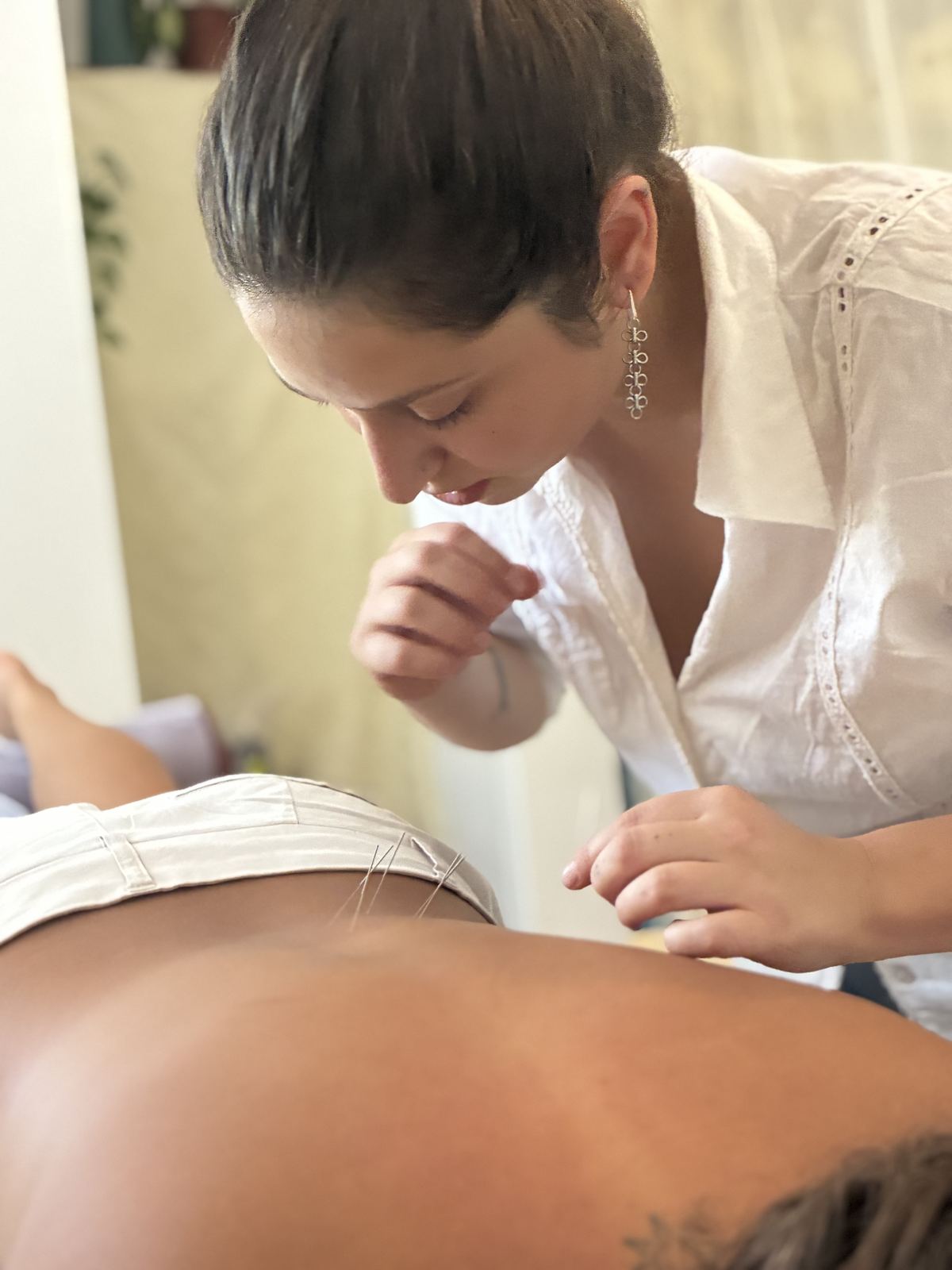
- Acupuncture at points around the pain and at distant points on the hands and legs.
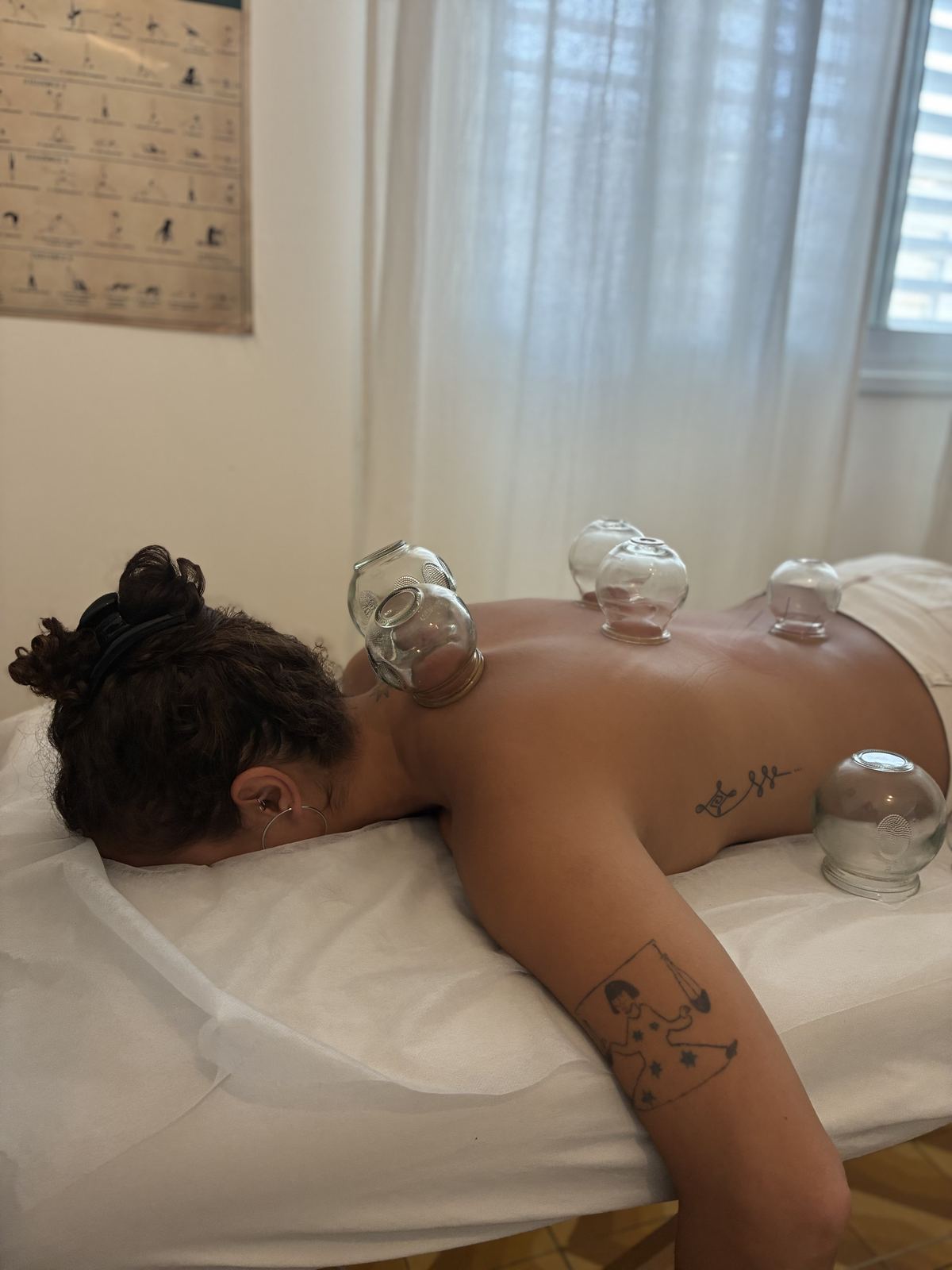
- Cupping to release tight muscles in the back and shoulders.
- Moxa, gentle warming of points, when the pain is worse in the cold or in the morning.
- Tui na, therapeutic Chinese massage for the muscles and joints.
The needles usually stay in for 20 to 30 minutes. Most people feel a pleasant heaviness and calm during that time, and many fall asleep.
What does the research say about acupuncture for chronic pain?
A large analysis published in 2018 pooled the data of 20,827 patients from 39 controlled trials on back and neck pain, osteoarthritis, shoulder pain and chronic headache. Acupuncture reduced pain more than no acupuncture and more than sham acupuncture, and most of the improvement held a year later, with the effect dropping by about 15%.
It's also worth knowing the other side: the gap between real and sham acupuncture is smaller than the gap between acupuncture and no treatment. In other words, part of the relief comes from the treatment as a whole, the touch, the time and the attention, and not only from the needle itself.
Source: Vickers et al., Acupuncture for Chronic Pain: Update of an Individual Patient Data Meta-Analysis, The Journal of Pain, 2018.
How many sessions will I need?
It depends on how long the pain has been there and what's causing it. Most people start with one session a week, and after four to six sessions we can usually see together whether your body is responding and how to continue. Once things improve, we space the sessions out.
When should I see a doctor first?
Acupuncture doesn't replace a medical check-up. See a doctor before treatment if:
- The pain started after a fall, an accident or a blow.
- You have numbness or weakness in your legs, or any change in bladder or bowel control.
- You have a fever, unexplained weight loss, or pain that wakes you at night and doesn't change when you shift position.
- Your knee is swollen, hot, or gives way under your weight.
Questions
Can I combine acupuncture with physiotherapy?
Yes, and they work well together. Physiotherapy builds strength and teaches better movement, and acupuncture helps bring down the pain and tightness so you can do the work. Tell me what your physiotherapist recommends so we can coordinate.
How soon will I feel a difference?
Some people feel relief after the first session, and others need a few. When pain has been there for years, change is usually gradual.
Does acupuncture hurt?
The needles are very fine, much thinner than an injection needle. Usually you feel a small tingle or a sense of warmth and heaviness at the point, and most people relax during the session.
Want to see if this is right for you?
Send me a few words on WhatsApp about what brings you in, and I'll get back to you to find a time that works. Sessions can be in English or Hebrew.